The central government advocates deepening reforms, strengthening innovation, and transforming growth models by increasing the proportion of service trade. This shifts the focus of manufacturing from physical product production to paid services. Statistics show that service trade accounts for 60% of total revenue for foreign equipment manufacturing companies. What is service trade? For Zhenhengli, it encompasses the adjustment, relocation, and major/medium repairs of used machinery. The design department must not only design machines but also establish standardized service protocols and fee structures. Zhenhengli's design department itself should evolve from being dependent on equipment sales to establishing independent fee structures, transitioning from planning to market-driven operations.
I. Correctly Viewing Used Machinery
From a manufacturer's perspective, mass production at scale is most appealing—sustained growth in output and sales naturally drives continuous profit growth. However, economic crises and environmental degradation remind us that this old path is unsustainable and unviable. Financial leasing is prevalent in Western developed nations. Manufacturers secure bank support only by committing to buybacks and demonstrating sound finances, while also maintaining high service standards. Conventionally, products come with one-year warranties and ten-year service guarantees. Therefore, I instructed the sales department to treat both new and used equipment as commodities. Drawing inspiration from the model of second-hand real estate agencies, we established fee structures for used equipment relocation and secondary installation/commissioning. These fair prices have earned positive feedback from customers.
II. Treating Parts and Paid Services as Equally Important as Equipment Sales
Parts sales management is cumbersome and low-margin, but when managed effectively, it can generate profits and positively impact new equipment sales. Simultaneously, it helps frontline employees increase their income, thereby stabilizing the workforce.
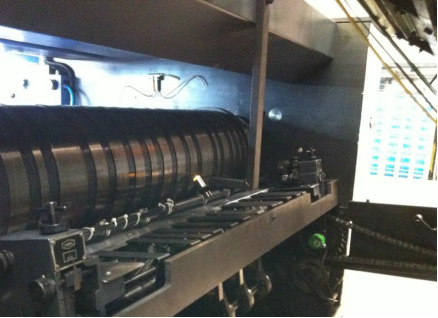
After purchasing a 1020 Coater from Beijing Zhenheng Limin Company, Wuhan Zhongyuan Printing discovered the ultrasonic double-sheet detector performed well and bought two units. They retrofitted one used Beiren 05 press and one used Heidelberg press. Through technical exploration, the domestic ultrasonic double-sheet detector achieved comparable performance, with installation position and angle being critical factors. Zhenheng Limin also expanded into retrofitting and installing inserters.