Currently, energy conservation and environmental protection have become buzzwords impacting every industry, and the printing sector is no exception. Whether it concerns printing materials or equipment, energy efficiency and environmental sustainability must form the foundation. As a leading domestic manufacturer of single-cylinder gravure presses, Beijing Zhenheng Limin Printing Machinery Co., Ltd. (hereinafter referred to as “Zhenheng Limin”) has continuously explored energy-saving and eco-friendly solutions for printing equipment. The company has launched a series of equipment retrofitting projects designed to help printing enterprises maximize the utilization and efficiency of existing machinery while achieving energy conservation and environmental protection goals. Notably, these retrofitting initiatives align with national remanufacturing industry policies.
Persistence
As early as 1996, Zhenhengli successfully converted a 08 offset press into a coating machine using an anilox roller cavity blade technology. However, due to the high complexity of this conversion, it could not be mass-produced, yielding low profits. Moreover, compared to the intrinsic value of the 08 offset press itself (most were sold as scrap metal), the conversion cost was relatively high, making it difficult for customers to accept. Additionally, the converted 08 press lacked universal compatibility in terms of format size, forcing the project's abandonment at the time. Though shelved, the concept of refurbishing old equipment remained deeply ingrained in Zhenhengli's management.
As environmental awareness grew, refurbishing old equipment gained renewed significance. Seizing this opportunity, Zhenhengli gradually transformed its vision into reality. In the first half of 2011, Zhenhengli collaborated with Denmark's Delux to successfully convert offset printing press coating rollers into anilox rollers. To date, over 20 imported offset presses have been successfully retrofitted domestically, overcoming model limitations and meeting the needs of more printing enterprises. In the second half of 2011, Zhenhengli partnered with Denmark's Delux for a second time, introducing the MCS modular box coating system. They initiated a project to retrofit offset printing units into varnishing units (enabling reverse varnishing). Currently, retrofit projects for multiple printing enterprises are under negotiation. In the second half of 2012, Zhenhengli expanded into cold foil stamping—a hot technology in packaging printing—by securing the agency for Foiltone's inline cold foil stamping system. The cold foil stamping retrofit project for Shenzhen Jinjia Color Printing Group Co., Ltd. is currently underway.
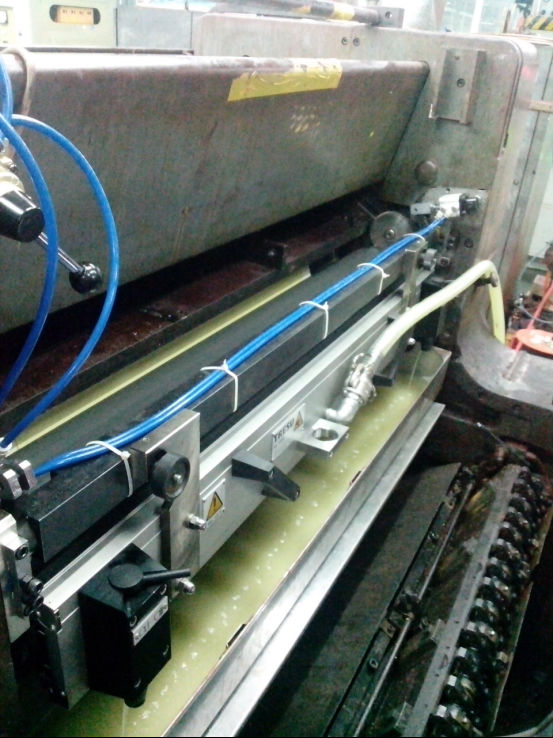
We all know that in Europe, due to higher labor costs, printing companies universally adopt inline coating. Although most Chinese printing companies still prefer offline coating, inline coating or inline processing will inevitably become the future trend. Moreover, retrofitting old equipment inherently promotes energy conservation and environmental protection. Therefore, Zhenhengli has consistently upheld this endeavor from the very beginning.
Resolute
Zhenhengli's equipment retrofitting projects proceeded systematically and efficiently. However, during a chance encounter, Feng Yan, General Manager of Zhenhengli, learned about the national remanufacturing industry policy. It suddenly dawned on him: weren't these equipment retrofitting projects precisely what remanufacturing entails?
Originating in the United States, China's remanufacturing industry started relatively late. Moreover, national support policies have not yet extended to the printing machinery manufacturing sector, leaving industry awareness of these policies limited. In essence, remanufacturing involves using old equipment as raw material. Through specialized processes and technologies, it undergoes a new manufacturing cycle based on its original construction. The remanufactured equipment matches or even surpasses the performance and quality of the original new product. In essence, remanufacturing revitalizes old equipment through a process characterized by three key features: First, material conservation—reusing 70% of original materials while adding only 30% new materials to achieve new functionality. Second, eco-design—reducing energy consumption. Third, shortening equipment production cycles.
Evidently, Zhenhengli's equipment retrofitting projects align with national remanufacturing industry policies. Upon learning this, Feng Yan expressed great enthusiasm, stating that Zhenhengli will steadfastly pursue this development path in the future. This commitment not only benefits printing enterprises but also contributes to the nation's environmental protection efforts. It is believed that through Zhenhengli's endeavors, China's printing machinery manufacturing industry will blossom with renewed vitality. Simultaneously, it is hoped that this platform will enable more industry peers to understand remanufacturing, working together to advance the development of the remanufacturing industry within the printing machinery manufacturing sector.